“It’s still a gradation of night, but night with tomorrow already luminous behind it”
-Stuart Dybek
Because “the snow melts slowly, the ice drips
into these cautious days, undressing under the bridge,
glass stalactites under the turnpike
refracting sunlight over the train tracks…”
Because the sound, lighter
than rain but multiple, musical, is unheard and
the words are drenched in mild purples where
the cars park, littered and seedy.
Soon we will feel differently
about these winter days with spring already
startled into answer – broken music unlocking
a question the snow banks have been
unwittingly asking for what seems
a very long time. Above, highway traffic
passes unseen – wet tire tracks perhaps,
sunblind drivers on their way somewhere.
Monday, April 28, 2014


Tuesday, April 8, 2014
The Reason the Darkness Grows
A passage I really like, from Chapman: Odysseus, after some brutally bad luck (his crew keeps landing on islands, exploring them, and getting eaten by the inhabitants) lands on yet another unknown island. He makes a coach's Big Game Day speech to his dudes about the necessity of doing the very thing that's brought them nothing but misfortune and death:
... Now, friends,
Afford unpassionate ear; though ill fate lends
So good cause to your passion, no man knows
The reason whence and how the darkness grows;
The reason how the morn is thus begun;
The reason how the man-enlight'ning sun
Dives under earth; the reason how again
He rears his golden head. Those counsels, then,
That pass our comprehension, we must leave
To him that knows their causes, and receive
Direction from him in our acts, as far
As he shall please to make them regular,
And stoop them to our reason. In our state
What then behooves us? Can we estimate,
With all our counsels, where we are? Or know
(Without instruction, past our own skills) how,
Put off from hence, to steer our course the more?
I think we cannot. We must then explore..."
Translation: There's a lot we don't and can't know. And much we can't control. The way forward is risky. So what are we going to do, nothing? Guess? No. We have to explore.
Many moments for us are like this one on Circe's mad island: brought by forces we can't fully understand to where guesswork simply won't suffice. The only way forward is to experiment, try to figure stuff out.
We have to drive into the dangerous heart of it and see what happens, hope for the best.
... Now, friends,
Afford unpassionate ear; though ill fate lends
So good cause to your passion, no man knows
The reason whence and how the darkness grows;
The reason how the morn is thus begun;
The reason how the man-enlight'ning sun
Dives under earth; the reason how again
He rears his golden head. Those counsels, then,
That pass our comprehension, we must leave
To him that knows their causes, and receive
Direction from him in our acts, as far
As he shall please to make them regular,
And stoop them to our reason. In our state
What then behooves us? Can we estimate,
With all our counsels, where we are? Or know
(Without instruction, past our own skills) how,
Put off from hence, to steer our course the more?
I think we cannot. We must then explore..."
Translation: There's a lot we don't and can't know. And much we can't control. The way forward is risky. So what are we going to do, nothing? Guess? No. We have to explore.
Many moments for us are like this one on Circe's mad island: brought by forces we can't fully understand to where guesswork simply won't suffice. The only way forward is to experiment, try to figure stuff out.
We have to drive into the dangerous heart of it and see what happens, hope for the best.
Wednesday, April 2, 2014
Chaos
Reading the Iliad took most of my cancer days. I was at war.
The Iliad is a big book, and I dabbled with multiple translations. I was after more than the story. I wanted to triangulate the whole mess, chart it from different angles to know it better, understand the distance between Homer and me.
What I really needed was a project. I took ill just before getting my second Masters in the Humanities, and basically for as long as I can remember I'd been at work on literary projects. At any one time I was grappling with philosophy, theory and literature, structuring an argument and turning it into prose, while also crafting verse, developing an art that seemed to tap into what was at the very center of who I was.
It's a sense-making act of incredible power to write. Even -- no, especially -- to write a paper. I think that's why most people hate it. By "power" I don't mean power over the world. More like power to keep the world at bay. Not that it's escapism, pure and simple. Art is too connected to life. But for me, papers and poems were both places to bring chaos into order. Playfully, at times ironically, because the order you make always puts you in touch with the chaos outside. You always see chaos winking through.
Thursday, June 13, 2013
Nostalgia for the Ephemeral in the Age of Urgent Now (3/3)
The dream SnapChat pitches: "Snap an ugly selfie ... and send it to a friend. They'll receive it, laugh, and then the snap disappears ... It's about the moment."

More like SnapChat: Because would you let your kids use an app called DickPix?
There's something disingenuous about a promise to regain something that never existed. It was always a lie, this sense of anonymity and being lost in the vastness of the internet. And it's not a lie we should perpetuate if we want people to grow up and manage a successful digital presence.
For me, the mirage dissipates when I realize I'm feeling nostalgic for being so damn naive.
Logically, SnapChat is for sending pictures you wouldn't want the other person to keep or share. So: pictures you very, very clearly shouldn't send in the first place.
Very simple strategies exist for the person on the receiving end to capture SnapChats. Just search "SnapChat Leaked" on Facebook and Google. (But not if you're at work, you dig?)
All the issues of trust and permanence are still there, only now if I send you a Snap of my cat doing something adorable, it's gone in an instant when you'd rather hold on to it.
We're only scratching the surface of how our technology is shaping this paradigm of the permanent and urgent now. I think SnapChat proves we're longing for a way to keep our connectivity without sacrificing our own impulsiveness, to be in the moment but free from the record of it. SnapChat pretends it can give us that back, but did we ever actually have it? On the internet, I mean.
Is this the trade-off: we get connected to everything, but everything gets connected back to us?
Tuesday, June 11, 2013
Nostalgia for the Ephemeral in the Age of Urgent Now (2/3)
Douglas Rushkoff argues that digital technology and perpetual connectivity have created a kind of "Present Shock" in which we experience "a diminishment of everything that isn’t happening right now — and the onslaught of everything that supposedly is."
Urgent, interruptive nowness is partnered with over-whelming permanence. Social media has ushered in the Age of Now (which you're missing out on by reading this btw), but the record of the moment still lasts forever.
For. Ev. Errr.
And that moment has been indexed, and it's very searchable.
There was, at first, promise of a kind of freedom on the web — before social technologies boosted our limited exposure. Back in those more naive times, we shared more openly, as if our posts sinking into the depths of whatever-we-called-it-before-Timeline was sufficient to erase them. We hid behind handles like they were codenames and shared peer-to-peer. No Google search string was sufficient to find you if you didn't want to be found. Anonymity was part of the game on "the net" and it was fun.
If you came through that in my generation, you grew up into what we have now. Facebook monitors your web surfing so it can sell you the shoes you were thinking of buying. Employers will dig up your bong-filled college photos on MySpace and pass you over for a job while the NSA sifts through your old Hotmail account to keep America free from terrorism.
It's been kind of a rough coming-of-age.
Given that, I can understand this counter-intuitive desire for impermanence. When SnapChat creators Evan Spiegel and Bobby Murphy were on Colbert (where I apparently get all my information), one of the things they mentioned was this ephemerality.
Urgent, interruptive nowness is partnered with over-whelming permanence. Social media has ushered in the Age of Now (which you're missing out on by reading this btw), but the record of the moment still lasts forever.
For. Ev. Errr.
And that moment has been indexed, and it's very searchable.
There was, at first, promise of a kind of freedom on the web — before social technologies boosted our limited exposure. Back in those more naive times, we shared more openly, as if our posts sinking into the depths of whatever-we-called-it-before-Timeline was sufficient to erase them. We hid behind handles like they were codenames and shared peer-to-peer. No Google search string was sufficient to find you if you didn't want to be found. Anonymity was part of the game on "the net" and it was fun.
If you came through that in my generation, you grew up into what we have now. Facebook monitors your web surfing so it can sell you the shoes you were thinking of buying. Employers will dig up your bong-filled college photos on MySpace and pass you over for a job while the NSA sifts through your old Hotmail account to keep America free from terrorism.
It's been kind of a rough coming-of-age.
Given that, I can understand this counter-intuitive desire for impermanence. When SnapChat creators Evan Spiegel and Bobby Murphy were on Colbert (where I apparently get all my information), one of the things they mentioned was this ephemerality.
Monday, June 10, 2013
Nostalgia for the Ephemeral in the Age of Urgent Now (1/3)
I decided to give SnapChat a go (bluekitsunebi is my handle).
I didn't really get why such a thing existed and I had no interest in using it, which was precisely why I felt I had to get an account. I did it for science. Also to answer the question: "Why else could this possibly exist except to drunk-send naked selfies?"
Funny thing, though: using SnapChat made me nostalgic for my AIM away messages. For when Facebook was only for college kids. For having a LiveJournal and a Geocities web page that I was sure no one could ever a.) trace back to me if they didn't already know me or b.) find without invitation.
Basically nostalgia for being a naive, 19-year-old hormone-bomb who impulsively shared anything and everything without fear of the consequences!
All of that stuff did not disappear. I had to find it and delete it and I'm only half certain it's actually gone. Some day I expect some of this old content to manifest, a ghost of my angsty youth, and destroy my already barely professional online persona.
Maybe that's what they're symbolizing with the cutely evil, gleefully mocking little dude in the SnapChat logo:

I didn't really get why such a thing existed and I had no interest in using it, which was precisely why I felt I had to get an account. I did it for science. Also to answer the question: "Why else could this possibly exist except to drunk-send naked selfies?"
Funny thing, though: using SnapChat made me nostalgic for my AIM away messages. For when Facebook was only for college kids. For having a LiveJournal and a Geocities web page that I was sure no one could ever a.) trace back to me if they didn't already know me or b.) find without invitation.
Basically nostalgia for being a naive, 19-year-old hormone-bomb who impulsively shared anything and everything without fear of the consequences!
All of that stuff did not disappear. I had to find it and delete it and I'm only half certain it's actually gone. Some day I expect some of this old content to manifest, a ghost of my angsty youth, and destroy my already barely professional online persona.
Maybe that's what they're symbolizing with the cutely evil, gleefully mocking little dude in the SnapChat logo:

Wednesday, June 5, 2013
Users: Engage!
What I'm hearing from the social media experts is that page likes and follows are shallow metrics.
This isn't news, especially since it's built right into Facebook's EdgeRank algorithms: a page like has less 'rank' than multiple post likes (at some point), and a share is worth more than a comment is worth more than a like.
Which ups the strategery, makes it all about the 'engagement.' Are they commenting? Sharing? That's Edge Juice. Digital capital.
If folks engage, they are more likely to see my future content, and that's a win for me and my brand.
It does not help the rank of my future posts if I share stuff no one wants to talk about.
Knowing this, I'm sure I'm not the only one to push things out into the virtual world hungry for that validation.

So what if it doesn't happen? Recently, hearing the crickets, I did a slapdash piece of market research. Having posted about once a day for a week regarding goings-on in Turkey (which feels REALLY IMPORTANT to me by the way) I decided to count up those posts (7 of them) and see how many likes and comments there actually were.
I then compared that to the last 7 posts I've made about anything else. The mix of text, image and video was about consistent.
I said slapdash, guys, this isn't real science. Just a quick pulse check.
Out of 7 posts, I had 28 likes and 9 comments. (I'm not a super popular guy.)
Out of 7 Turkey-related posts, 3 likes and 2 comments.
Getting say ~15% my 'normal' engagement on the Turkey posts than the rest?
How to interpret this? I could get judgey and decide that everyone's so jaded and uninformed. Why else don't they care? (Easy to feel this way. Why should kitty photos trend more than revolution?)
But I take this "data" with a grain of salt. All I know is that the topic of Turkey is getting poor user engagement among my Facebook audience. Without access to more complicated analytics, I couldn't even tell you who's clicking through this stuff.
It has me wondering: are there times when user engagement is a bad metric to rely on? What if some topics get seen, even clicked -- but not liked or commented on? Does that always mean I should post something else? That I made a mistake? Do I just need to position the content differently? Try a different platform? Seek a different audience?
Does the user engagement metric drive us to preach to the choir? There is always the case of strong disagreement (flaming and haterade are still user engagement, I guess), which suggests at best that digital discourse is likely to polarize.
Probably yes, some of those things. But also I think maybe user engagement isn't always everything. Some things we need to see even if we're not ready to talk about them. How do we measure that?

This isn't news, especially since it's built right into Facebook's EdgeRank algorithms: a page like has less 'rank' than multiple post likes (at some point), and a share is worth more than a comment is worth more than a like.
Which ups the strategery, makes it all about the 'engagement.' Are they commenting? Sharing? That's Edge Juice. Digital capital.
If folks engage, they are more likely to see my future content, and that's a win for me and my brand.
It does not help the rank of my future posts if I share stuff no one wants to talk about.
Knowing this, I'm sure I'm not the only one to push things out into the virtual world hungry for that validation.

So what if it doesn't happen? Recently, hearing the crickets, I did a slapdash piece of market research. Having posted about once a day for a week regarding goings-on in Turkey (which feels REALLY IMPORTANT to me by the way) I decided to count up those posts (7 of them) and see how many likes and comments there actually were.
I then compared that to the last 7 posts I've made about anything else. The mix of text, image and video was about consistent.
I said slapdash, guys, this isn't real science. Just a quick pulse check.
Out of 7 posts, I had 28 likes and 9 comments. (I'm not a super popular guy.)
Out of 7 Turkey-related posts, 3 likes and 2 comments.
Getting say ~15% my 'normal' engagement on the Turkey posts than the rest?
 |
| The hot cakes really aren't moving. |
How to interpret this? I could get judgey and decide that everyone's so jaded and uninformed. Why else don't they care? (Easy to feel this way. Why should kitty photos trend more than revolution?)
But I take this "data" with a grain of salt. All I know is that the topic of Turkey is getting poor user engagement among my Facebook audience. Without access to more complicated analytics, I couldn't even tell you who's clicking through this stuff.
It has me wondering: are there times when user engagement is a bad metric to rely on? What if some topics get seen, even clicked -- but not liked or commented on? Does that always mean I should post something else? That I made a mistake? Do I just need to position the content differently? Try a different platform? Seek a different audience?
Does the user engagement metric drive us to preach to the choir? There is always the case of strong disagreement (flaming and haterade are still user engagement, I guess), which suggests at best that digital discourse is likely to polarize.
Probably yes, some of those things. But also I think maybe user engagement isn't always everything. Some things we need to see even if we're not ready to talk about them. How do we measure that?

Saturday, June 1, 2013
The Suck Zone
A long, loud tone blasts through the terminal.

None of which prepares me for what follows.
"May I have your attention please," begins a calm-voiced woman, and the dude next to me wryly speaks my thought: "Trust me, lady, you have it."
I'm in the St. Louis airport waiting on an evening flight to the Windy City. The weather has been downright mid-Western all day and all the news is about destruction in Oklahoma.
They've made less intrusive alerts already about "severe thunderstorms," including the comforting instruction to stay away from windows.

None of which prepares me for what follows.
"There is a tornado in the area. Do not panic."
Too late.
I'm from Boston. We get an occasional blizzard, rather quaint in their own way, a nor'easter or two over the years -- enough to titillate but rarely to threaten.
(Ok, I guess we also have spats of terrorism punctuated by gun violence, but that's a recent development.)
I don't do tornados. I also don't do crowded airport restrooms when I can help it, but unfortunately that's what passes for the emergency shelter, so it's either that or the suck zone.
I'm actually just outside the restroom when the cyclone hits. The ground shakes almost imperceptibly and a gust of wind pours through the terminal. The power cuts, but the generators kick in so fast we barely notice.
And that's it. Only later is it confirmed: the airport was hit on the far side from where we are and sustained some damage.
And that's it. Only later is it confirmed: the airport was hit on the far side from where we are and sustained some damage.
Now we're all perfectly safe, and completely stranded.
I wish that had been the end of the story.
After a couple of flight reschedulings and finding a nearby hotel room for the night, not to mention many a thought about the cost in time and dollars of driving from MO to MA, a shuttle delivers me to an Embassy Suites and I'm given a room on the fifth floor. I lug my belongings into the elevator and take it up to 5.
30 seconds later I'm in my room. Another 60 after that the power cuts out.
The first twinge of anxiety comes from how dark it is: I barely had time to register the layout of the place before having to find my way back to my iPad flashlight, running my hands along the wall and groping for imaginary furniture.
Then the screams start.
Someone is trapped in the elevator and something is wrong. These aren't calls for help, they're incensed poundings on the door. Howls, growls, almost inhuman. Someone is either injured or hulking out.
My first instinct is to investigate, my second to help. But how to get downstairs? Before I can figure that out, I see that hotel staff is on the case and put it together that this lady is not hurt, just living her worst nightmare.
I can relate, I mutter, thinking back to that men's room.
All that remains is to help some folks carry luggage up the stairs and try to sleep.
It's up and out early in the morning to see if I'm ever getting out of this city.
(Update: Published from 25,000 feet. (: )
Tuesday, May 28, 2013
Life Anxiety, Epilogue: Terror Management
(Earlier posts in this series.)
Why would a story that portrays the murder of children as a triumph over evil resonate with someone? Answer that question, and you've taken serious steps to understand the Boston Marathon bombing, not to mention the American drone war.
It's not to say those two examples are identical, as one overtly targets children and the other rationalizes them as "collateral damage." But these two share more than the effect of child corpses. They also share a cause: the attempt to defeat evil by locating it in others and destroying them.
In my last post, I said that it's our job to write better stories than this. We need to figure out how to spin out yarns for ourselves that are 1.) aware of our fear but 2.) allow us to become the heroes we know we are.
In order to do that, we first need to consider the possibility that our own issues with mortality are propelling a less-than-conscious hero narrative, one that puts us at many disadvantages but which we are unwilling to change because it forms the locus of our self-esteem.
Phew. No easy stuff.
To help with that, the Ernest Becker Foundation strives to share Becker's message and ideas, and the work of Becker lives on in Terror Management Theory.
Really interesting experiments are being done that add data to these ideas. For example, did you know that subtly reminding someone of their own mortality can make them more aggressive, less forgiving and more reliant on cultural symbols? It's a fact.
I hope you'll read on, and write better.
Why would a story that portrays the murder of children as a triumph over evil resonate with someone? Answer that question, and you've taken serious steps to understand the Boston Marathon bombing, not to mention the American drone war.
It's not to say those two examples are identical, as one overtly targets children and the other rationalizes them as "collateral damage." But these two share more than the effect of child corpses. They also share a cause: the attempt to defeat evil by locating it in others and destroying them.
In my last post, I said that it's our job to write better stories than this. We need to figure out how to spin out yarns for ourselves that are 1.) aware of our fear but 2.) allow us to become the heroes we know we are.
In order to do that, we first need to consider the possibility that our own issues with mortality are propelling a less-than-conscious hero narrative, one that puts us at many disadvantages but which we are unwilling to change because it forms the locus of our self-esteem.
Phew. No easy stuff.
To help with that, the Ernest Becker Foundation strives to share Becker's message and ideas, and the work of Becker lives on in Terror Management Theory.
Really interesting experiments are being done that add data to these ideas. For example, did you know that subtly reminding someone of their own mortality can make them more aggressive, less forgiving and more reliant on cultural symbols? It's a fact.
 |
| Just ask Reapy. |
I hope you'll read on, and write better.
Friday, May 24, 2013
Life Anxiety, Part Twelve: Unfreedom
(Earlier posts in this series.)
So Becker suggests that we need "healthy repressions, ... explicit immortality-ideologies, myths of heroic transcendence." Whatever that means!
We need to feel secure in the face of death. We need a bid for immortality and we need to see ourselves as heroic. Otherwise we retreat from life until we have nowhere left to run.
We live in a state of constant anxiety, hence the name of the blog.
But what are "healthy repression?" How can we be "explicit" about our own mythologies and still believe in them? Dr. B leaves it to us to figure the rest of that out.
Clearly it's not enough to just follow heroes who preach love and peace.
If all we needed were peaceful lover-leaders, the KKK would never have lynched in the name of Christ and Gandhi would have ended all the wars.
But the more "explicit" we are about our need for heroism and our association of evil with death, the less likely we are to come under "The Spell Cast by Persons" a.k.a. "The Nexus of Unfreedom."

We live on borrowed power. That doesn't change. We look for something outside of ourselves to connect to. We find the person telling the story we need to hear. We project our needs onto their story and make it our own.
What's left for us to figure out, and it's no small task, is: "What is creative projection? What is life-enhancing illusion?"
After all, we write these stories. For ourselves and for each other.
Imagine what we could do if we were all better writers.
Epilogue: Terror Management
So Becker suggests that we need "healthy repressions, ... explicit immortality-ideologies, myths of heroic transcendence." Whatever that means!
We need to feel secure in the face of death. We need a bid for immortality and we need to see ourselves as heroic. Otherwise we retreat from life until we have nowhere left to run.
We live in a state of constant anxiety, hence the name of the blog.
But what are "healthy repression?" How can we be "explicit" about our own mythologies and still believe in them? Dr. B leaves it to us to figure the rest of that out.
Clearly it's not enough to just follow heroes who preach love and peace.
 |
| Especially if they are made of guns. |
If all we needed were peaceful lover-leaders, the KKK would never have lynched in the name of Christ and Gandhi would have ended all the wars.
 |
| "What is it good for? Absolutely nothing." - Gandhi |
But the more "explicit" we are about our need for heroism and our association of evil with death, the less likely we are to come under "The Spell Cast by Persons" a.k.a. "The Nexus of Unfreedom."


We live on borrowed power. That doesn't change. We look for something outside of ourselves to connect to. We find the person telling the story we need to hear. We project our needs onto their story and make it our own.
What's left for us to figure out, and it's no small task, is: "What is creative projection? What is life-enhancing illusion?"
After all, we write these stories. For ourselves and for each other.
Imagine what we could do if we were all better writers.
Epilogue: Terror Management
Wednesday, May 22, 2013
Life Anxiety, Part Eleven: Holy War
(Earlier posts in this series.)
So Becker argues that "to become conscious of what one is doing to earn his feeling of heroism is the main self-analytic problem of life."
This is no easy task. "Self-knowledge is the hardest human task because it risks revealing to [us] how [our] self-esteem was built: on the powers of others in order to deny ... death."
Doing a little analysis on the hero myths provided by culture, he finds that "every society ... is a 'religion' whether it thinks so or not: Soviet 'religion' and Maoist 'religion' are as truly religious as are scientific and consumer 'religion,' no matter how much they may try to disguise themselves."
All wars are holy wars.
Put that in your pipe and smoke it, Bill Maher.

Merely realizing the fundamental need for a heroic purpose, which society is built to meet, will not somehow cure humanity of this need.
Instead he suggests that we need "healthy repressions, ... explicit immortality-ideologies, myths of heroic transcendence."
Next: Unfreedom
So Becker argues that "to become conscious of what one is doing to earn his feeling of heroism is the main self-analytic problem of life."
This is no easy task. "Self-knowledge is the hardest human task because it risks revealing to [us] how [our] self-esteem was built: on the powers of others in order to deny ... death."
Doing a little analysis on the hero myths provided by culture, he finds that "every society ... is a 'religion' whether it thinks so or not: Soviet 'religion' and Maoist 'religion' are as truly religious as are scientific and consumer 'religion,' no matter how much they may try to disguise themselves."
All wars are holy wars.
Put that in your pipe and smoke it, Bill Maher.

Merely realizing the fundamental need for a heroic purpose, which society is built to meet, will not somehow cure humanity of this need.
Instead he suggests that we need "healthy repressions, ... explicit immortality-ideologies, myths of heroic transcendence."
Next: Unfreedom
Monday, May 20, 2013
Life Anxiety, Part Ten: Space Opera
(Earlier posts in this series.)
Previously, on a very special Life Anxiety, we discovered the root of all evil. No big.
No wonder Becker won a Pulitzer.
Turns out money isn't the root of all evil. Or greed. Or "hate." It's heroism.
See why that's funny? Because every time something evil happens we smother it in heroism. It's like trying to put out a fire with napalm.
Scenario: the righteous rag-tag band of outlaw underdogs lead a quest to liberate everybody from a conquering Empire. With the help of a mysterious and supernatural Force, they exploit a weakness of the Empire's stronghold and blow it up.
Fantasy:

Reality:

And you thought Episode 1 was a disaster.
So what can we do to break up the "useless self-sacrifices in unjust wars" or the "ignoble" or "tormented heroics" of, say, your Tamerlan Tsarnaev?
Becker answers: "To become conscious of what one is doing to earn his feeling of heroism is the main self-analytic problem of life."
I love the qualification "main self-analytic problem." The main main problem of life, then, could arguably be a lack of sufficient self-analysis -- although this is not quite Becker's conclusion.
Next: Holy War
Previously, on a very special Life Anxiety, we discovered the root of all evil. No big.
No wonder Becker won a Pulitzer.
Turns out money isn't the root of all evil. Or greed. Or "hate." It's heroism.
See why that's funny? Because every time something evil happens we smother it in heroism. It's like trying to put out a fire with napalm.
Scenario: the righteous rag-tag band of outlaw underdogs lead a quest to liberate everybody from a conquering Empire. With the help of a mysterious and supernatural Force, they exploit a weakness of the Empire's stronghold and blow it up.
Fantasy:

Reality:

And you thought Episode 1 was a disaster.
So what can we do to break up the "useless self-sacrifices in unjust wars" or the "ignoble" or "tormented heroics" of, say, your Tamerlan Tsarnaev?
Becker answers: "To become conscious of what one is doing to earn his feeling of heroism is the main self-analytic problem of life."
I love the qualification "main self-analytic problem." The main main problem of life, then, could arguably be a lack of sufficient self-analysis -- although this is not quite Becker's conclusion.
Next: Holy War
Thursday, May 16, 2013
Life Anxiety, Part Nine: Root of All Evil
(Earlier posts in this series.)
Primal terror is controlled through smaller, more concrete anxieties, and so you end up washing your hands 'religiously,' avoiding bridges or trains, keeping your voice down or on a shrill note higher than everyone else's.
But there is no heroism more direct than choosing death in the name of something greater than yourself. We should try to remember this, every time we greet a returned Marine or spit at the image of a terrorist's face. A wide world may seem to exist between the cherished heroism of the one and the despicable evil of the other, but underneath beats the same heart: a willingness to deal death and to risk it oneself in the name of what is "good," however that's been defined.
"As Nietzsche saw and shocked his world with ... all moral categories are power categories ... Purity, goodness, rightness -- these are ways of keeping power intact so as to cheat death."
We've made lasting symbols to ensure immortality, and our greatest anxieties are located there. If they are threatened or attacked, it becomes very clear to us where the evil is. By extension even the reform of some social structures is certain to appear downright apocalyptic, as we see going on right now in the marriage equality debate.
Doing good turns into getting rid of evil. George W. Bush proved that even in America, this does not have to be unconscious or metaphoric.
It's a war of ideas, but actual bodies stack up. Becker's pronouncement is chilling and severe: "man's natural and inevitable urge to deny mortality and achieve a heroic self-image are the root causes of human evil."

Primal terror is controlled through smaller, more concrete anxieties, and so you end up washing your hands 'religiously,' avoiding bridges or trains, keeping your voice down or on a shrill note higher than everyone else's.
But there is no heroism more direct than choosing death in the name of something greater than yourself. We should try to remember this, every time we greet a returned Marine or spit at the image of a terrorist's face. A wide world may seem to exist between the cherished heroism of the one and the despicable evil of the other, but underneath beats the same heart: a willingness to deal death and to risk it oneself in the name of what is "good," however that's been defined.
"As Nietzsche saw and shocked his world with ... all moral categories are power categories ... Purity, goodness, rightness -- these are ways of keeping power intact so as to cheat death."
We've made lasting symbols to ensure immortality, and our greatest anxieties are located there. If they are threatened or attacked, it becomes very clear to us where the evil is. By extension even the reform of some social structures is certain to appear downright apocalyptic, as we see going on right now in the marriage equality debate.
Doing good turns into getting rid of evil. George W. Bush proved that even in America, this does not have to be unconscious or metaphoric.
It's a war of ideas, but actual bodies stack up. Becker's pronouncement is chilling and severe: "man's natural and inevitable urge to deny mortality and achieve a heroic self-image are the root causes of human evil."
Next: Space Opera
Monday, May 13, 2013
Life Anxiety, Part Eight: The Heroism of Denial
(Earlier posts in this series.)
Most heroism demonstrates a pattern.
As Becker puts it, "history is the career of a frightened animal who has to deaden himself against life in order to live." It's a matter of range, not state. One is never submerged completely in the raw stream of life. You can't exist outside of the process of self-mediation that is your essence.
Phenomenologists call this "the impossibility of a complete reduction."
This is good news, really. Many have drowned in that stream. Human history is littered with the shattered lives of those whose coping methods broke apart. Or their victims. No one said performing in a theatre of heroism was easy.
Becker sometimes sounds pejorative about denial and repression, especially on a first read. But he also insists that it is necessary. Some amount of sustaining narrative is necessary to get us through the days. Whether it's desperate spin or enriching myth is up to us.
Most cultures interpret denial and repression in heroic ways: "a human animal who is partly dead to the world ... is most 'dignified' when he shows a certain obliviousness to his fate."
Heroes risk -- or give -- their life for others.
The courage of the warrior is an expression of heroic repression.

Next: Root of All Evil
Most heroism demonstrates a pattern.
As Becker puts it, "history is the career of a frightened animal who has to deaden himself against life in order to live." It's a matter of range, not state. One is never submerged completely in the raw stream of life. You can't exist outside of the process of self-mediation that is your essence.
Phenomenologists call this "the impossibility of a complete reduction."
 |
| Maurice Merleau-Ponty |
Becker sometimes sounds pejorative about denial and repression, especially on a first read. But he also insists that it is necessary. Some amount of sustaining narrative is necessary to get us through the days. Whether it's desperate spin or enriching myth is up to us.
Most cultures interpret denial and repression in heroic ways: "a human animal who is partly dead to the world ... is most 'dignified' when he shows a certain obliviousness to his fate."
Heroes risk -- or give -- their life for others.
The courage of the warrior is an expression of heroic repression.

Next: Root of All Evil
Wednesday, May 8, 2013
Life Anxiety, Part Seven: Theatre for Heroism
(Part One.)
(Part Five.)
We've finally gotten to where Becker begins: "Heroism is first and foremost a reflex of the terror of death."
Heroism is the essential component of the stories we invent. Becker quotes the psychologist William James on the subject:

We extend our thirst for life into that theatre, that symbolic arena where we seek a performance that scores a victory over meaninglessness, transience and death.
Of course we deflect this task in order to shield ourselves from its magnitude. For most of us a local heroism is sufficient, whether it's earning our family's daily bread or "piling up figures in a bank book."
For others, life exerts a greater pressure and demands a greater response.
Either way, the theatre is a fabrication, our construction. "This is what society is and always has been: a symbolic action system, a structure of statuses and roles, customs and rules for behavior, designed to serve as a vehicle for earthly heroism."
Next: Heroism of Denial
(Part Five.)
We've finally gotten to where Becker begins: "Heroism is first and foremost a reflex of the terror of death."
Heroism is the essential component of the stories we invent. Becker quotes the psychologist William James on the subject:

We extend our thirst for life into that theatre, that symbolic arena where we seek a performance that scores a victory over meaninglessness, transience and death.
Of course we deflect this task in order to shield ourselves from its magnitude. For most of us a local heroism is sufficient, whether it's earning our family's daily bread or "piling up figures in a bank book."
For others, life exerts a greater pressure and demands a greater response.
Either way, the theatre is a fabrication, our construction. "This is what society is and always has been: a symbolic action system, a structure of statuses and roles, customs and rules for behavior, designed to serve as a vehicle for earthly heroism."
Next: Heroism of Denial
Tuesday, May 7, 2013
Life Anxiety, Part Six: Composing
(Part Five)
I know phenomenology is for most either unheard of or incomprehensible psuedo-science, but it's the one philosophical strand I wish was more present in Becker's synthesis. Here's the briefest of overviews:
Phenomenology is a way of thinking about thinking. It's about describing as opposed to explaining how the mind works, how our perception constructs and reconstructs reality.
Phenomenologists find that we are made up of connections to the world. We are always in a situation that we're responding to, so we're never the wholly self-contained creatures we rationalize ourselves to be.
In fact, what we are in essence is a process. Many Eastern religions and mystics hit on this. Buddhism calls it interdependent becoming: we are connected to everything and all of it is happening, is in flux.
The essential process of our minds is composing the story of which we are part. To us, that story presents itself ready-made. The world already has meaning and we discover it there.
So this "situation" we are in is more than the objects around us, more than our senses, more than the weather. The situation includes our feelings about the situation. It includes placement in time as well as space, includes where we come from and points us forward to what we intend.
All the time the brain is explaining itself to itself, is carrying out this act of composition.
This hardly happens in a vacuum. We also find ourselves already inside pre-made stories, whole narrative threads that we have to write ourselves into or against.

Some enter into these cultural constructions more passively than others. How can they do otherwise, having never been taught to compose themselves?
But everyone interprets, and thus can warp, distort, mutate.
Becker still comes more or less to the conclusion that if the essence of what we are is an act of interpreting and making stories, we'd better get really goddamned good at interpreting and making stories.
Next: Theatre for Heroism
I know phenomenology is for most either unheard of or incomprehensible psuedo-science, but it's the one philosophical strand I wish was more present in Becker's synthesis. Here's the briefest of overviews:
Phenomenology is a way of thinking about thinking. It's about describing as opposed to explaining how the mind works, how our perception constructs and reconstructs reality.
Phenomenologists find that we are made up of connections to the world. We are always in a situation that we're responding to, so we're never the wholly self-contained creatures we rationalize ourselves to be.
In fact, what we are in essence is a process. Many Eastern religions and mystics hit on this. Buddhism calls it interdependent becoming: we are connected to everything and all of it is happening, is in flux.
 |
| I'm drunk on panda mystery. |
The essential process of our minds is composing the story of which we are part. To us, that story presents itself ready-made. The world already has meaning and we discover it there.
So this "situation" we are in is more than the objects around us, more than our senses, more than the weather. The situation includes our feelings about the situation. It includes placement in time as well as space, includes where we come from and points us forward to what we intend.
All the time the brain is explaining itself to itself, is carrying out this act of composition.
This hardly happens in a vacuum. We also find ourselves already inside pre-made stories, whole narrative threads that we have to write ourselves into or against.

Some enter into these cultural constructions more passively than others. How can they do otherwise, having never been taught to compose themselves?
But everyone interprets, and thus can warp, distort, mutate.
Becker still comes more or less to the conclusion that if the essence of what we are is an act of interpreting and making stories, we'd better get really goddamned good at interpreting and making stories.
Next: Theatre for Heroism
Sunday, May 5, 2013
Life Anxiety, Part Five: Inheritance
(Part One.)(Part Four.)
Regroup: the simplest expression of what I've been writing about is that "man transcends death not only by continuing to feed his appetites, but especially by finding a meaning for his life, some kind of larger scheme into which he fits."
To get that larger meaning we've "erected cultural symbols which do not age or decay."
We do this "to quiet ... fear of [the] ultimate end."
Ok, these are really two ideas, or at least two versions of one idea, and I think sometimes Becker doesn't discriminate enough between them.
The first idea is about fear. The root of fear is death. This Becker emphasizes. We have to do something with that fear. We need to put death in its place -- this is fundamental to our survival.
We need a view, a pose, a "vital lie," a sustaining fiction. We need to control that primal instinct which senses the danger of the "overwhelmingly miraculous and incomprehensible world."
(That primal instinct we might call "life anxiety," if we were into burying ledes.)
This means we invent character to protect ourselves from the world. This puts fear at the root of all we create.
But the other side of the coin is in that "man transcends death" bit. I don't think Becker means that ironically. Even if it may be correct, in one sense, to call character a "lie," that lie is still "vital." It's a fiction, really. An art at the heart of who we are.
Our stories are vehicles to overcoming the limits of mortality. Stories are the only kind of power we have over the world.
It's easy to get caught up in the idea that everyone else is living a lie, especially if their story conflicts with ours. In the same way, "at heart one doesn't feel that he will die, he only feels sorry for the man next to him." Or woman. Ahem!
We all participate. We are all creators. Faced with the disabling presence of disease and death, we either write our own way out, or we lean on stories co-authored by others. Stories powerful enough to combat finitude.
This is not something we can opt out of. We can't call out others for having a "vital lie" without hypocrisy -- though we can certainly question a lie's effectiveness or call out its effects.
This shared project of confabulation is part of our unique human inheritance.
Next: Composing
Regroup: the simplest expression of what I've been writing about is that "man transcends death not only by continuing to feed his appetites, but especially by finding a meaning for his life, some kind of larger scheme into which he fits."
To get that larger meaning we've "erected cultural symbols which do not age or decay."
We do this "to quiet ... fear of [the] ultimate end."
Ok, these are really two ideas, or at least two versions of one idea, and I think sometimes Becker doesn't discriminate enough between them.
The first idea is about fear. The root of fear is death. This Becker emphasizes. We have to do something with that fear. We need to put death in its place -- this is fundamental to our survival.
We need a view, a pose, a "vital lie," a sustaining fiction. We need to control that primal instinct which senses the danger of the "overwhelmingly miraculous and incomprehensible world."
(That primal instinct we might call "life anxiety," if we were into burying ledes.)
This means we invent character to protect ourselves from the world. This puts fear at the root of all we create.
 |
| "A silence already filled with noises" |
But the other side of the coin is in that "man transcends death" bit. I don't think Becker means that ironically. Even if it may be correct, in one sense, to call character a "lie," that lie is still "vital." It's a fiction, really. An art at the heart of who we are.
Our stories are vehicles to overcoming the limits of mortality. Stories are the only kind of power we have over the world.
It's easy to get caught up in the idea that everyone else is living a lie, especially if their story conflicts with ours. In the same way, "at heart one doesn't feel that he will die, he only feels sorry for the man next to him." Or woman. Ahem!
We all participate. We are all creators. Faced with the disabling presence of disease and death, we either write our own way out, or we lean on stories co-authored by others. Stories powerful enough to combat finitude.
This is not something we can opt out of. We can't call out others for having a "vital lie" without hypocrisy -- though we can certainly question a lie's effectiveness or call out its effects.
This shared project of confabulation is part of our unique human inheritance.
Next: Composing
Thursday, May 2, 2013
Life Anxiety, Part Four: Immortality
(Part One)
Last time the poet Rilke taught us that you can be extinguished, but you can't be revoked. You were. In the face of outstanding odds, despite the obscene and the absurd, you happened.
How far is it, really, the distance between seeming irrevocable and being immortal? How far to any one of the direct immortality narratives provided by the world's many religions and mythologies?
Our mere existence suggests some kind of permanence to us, if only because we aren't cognitively capable of conceiving of our consciousness ceasing to exist.
For Becker (an anthropologist, remember) the consistency with which all cultures have invented immortality narratives suggests that there must be a need for them. Becker questioned the purpose of these stories that guarantee our permanence.
More than that, he asked why these stories meant to assure our permanence are worth sacrificing our actual lives.
He concluded that "what man really fears is not so much extinction, but extinction with insignificance."
We have to do more than happen. We have to leave our mark on the world. Something of us has to remain.
We all need some bid for immortality.
Fortunately, immortality narratives seem to be in abundance. Certainly our children are a direct route to leaving a part of ourselves in the world, moving forward beyond our deaths. But many also believe that when their body dies, their spirit or soul will hang around, even transcend to paradise.
Some believe they will come back again in another form. Even science takes as a basic principle that energy cannot be destroyed -- and matter is just a form energy sometimes takes.
In the same way that our body is made up of star matter, we know that something does remain of us after death.
If only that were enough.
Next: Inheritance
Last time the poet Rilke taught us that you can be extinguished, but you can't be revoked. You were. In the face of outstanding odds, despite the obscene and the absurd, you happened.
How far is it, really, the distance between seeming irrevocable and being immortal? How far to any one of the direct immortality narratives provided by the world's many religions and mythologies?
Our mere existence suggests some kind of permanence to us, if only because we aren't cognitively capable of conceiving of our consciousness ceasing to exist.
For Becker (an anthropologist, remember) the consistency with which all cultures have invented immortality narratives suggests that there must be a need for them. Becker questioned the purpose of these stories that guarantee our permanence.
More than that, he asked why these stories meant to assure our permanence are worth sacrificing our actual lives.
He concluded that "what man really fears is not so much extinction, but extinction with insignificance."
We have to do more than happen. We have to leave our mark on the world. Something of us has to remain.
We all need some bid for immortality.
Fortunately, immortality narratives seem to be in abundance. Certainly our children are a direct route to leaving a part of ourselves in the world, moving forward beyond our deaths. But many also believe that when their body dies, their spirit or soul will hang around, even transcend to paradise.
Some believe they will come back again in another form. Even science takes as a basic principle that energy cannot be destroyed -- and matter is just a form energy sometimes takes.
In the same way that our body is made up of star matter, we know that something does remain of us after death.
If only that were enough.
Next: Inheritance
Monday, April 29, 2013
Life Anxiety, Part Three: Once
Why commit an act of terrorism? And why call it terrorism? What is terror, anyway and why are we at war with it?
Becker answered these questions in the 70's. Sometimes it seems impossible to me how much our society struggles blindly with evil when the 101 textbook on the subject has been around for 4 decades.
But before we get to evil, we have to talk about terror, which means we have to talk about death.
Day in and day out we exist inside of a protective bubble built out of the real and symbolic problems and joys of our lives: our hungers and aches, our careers, our loves, our families, our politics, our pleasures, our grief.
Then a flash, deafening heat, and the body is torn apart. Those who survive are forced to witness, to remember that it's only flesh after all. And to fear the thousand natural shocks that flesh is heir to.
What if that were it? What if you were snuffed out in a tragic instant?
Then they put some rotting meat into a dirt hole, and the "cosmic specialness" that was you simply ceases forever.
The mind rejects such a thought. Rather, at the very least, the epigram Becker gives his magnum opus, from Rilke:
And we also once. Never again. But this having been
once, although only once, to have been of the earth,
seems irrevocable.
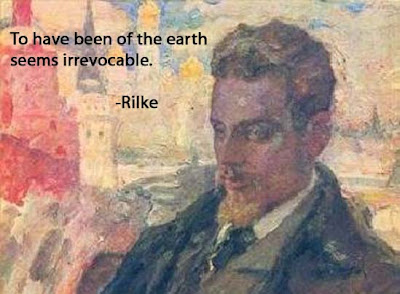
For us, the idea of death is a terrible burden that must be dealt with.
All terror is at root the terror of death, which we refuse to allow entry into our conscious lives.
We have always been at war with terror.
Next: Immortality
Becker answered these questions in the 70's. Sometimes it seems impossible to me how much our society struggles blindly with evil when the 101 textbook on the subject has been around for 4 decades.
But before we get to evil, we have to talk about terror, which means we have to talk about death.
Day in and day out we exist inside of a protective bubble built out of the real and symbolic problems and joys of our lives: our hungers and aches, our careers, our loves, our families, our politics, our pleasures, our grief.
Then a flash, deafening heat, and the body is torn apart. Those who survive are forced to witness, to remember that it's only flesh after all. And to fear the thousand natural shocks that flesh is heir to.
What if that were it? What if you were snuffed out in a tragic instant?
Then they put some rotting meat into a dirt hole, and the "cosmic specialness" that was you simply ceases forever.
The mind rejects such a thought. Rather, at the very least, the epigram Becker gives his magnum opus, from Rilke:
And we also once. Never again. But this having been
once, although only once, to have been of the earth,
seems irrevocable.

For us, the idea of death is a terrible burden that must be dealt with.
All terror is at root the terror of death, which we refuse to allow entry into our conscious lives.
We have always been at war with terror.
Next: Immortality
Saturday, April 27, 2013
Life Anxiety, Part Two: First Page
Previously: Science of Man
Here's a taste of the chilling (or hilarious, depending on your palette) Introduction to Ernest Becker's Escape from Evil:
"Life on this planet is a gory spectacle, a science fiction nightmare in which digestive tracts fitted with teeth at one end are tearing away at whatever flesh they can reach, and at the other end are piling up the fuming waste excrement as they move along in search of more flesh."
Yep. That's from PAGE. ONE. A reduction of life to "a constant struggle to feed," to gnashing and excreting, to flesh and shit.
Becker
is very intentional in this perspective. He takes as a page one premise
a vision of humanity that we've been fighting for eons. Though Freud and Darwin did a number on the collective psyche by knocking man down off his own pedestal, even today ardent
creationists consider evolution disgusting.
We blaspheme to relate the grandeur that we are to mere animals. We do not descend from beasts, but from God.
We are sustained by this belief that we are God's children, made in His image, or that we are magic and have control over the forces of life and death. We must be blessed with the love of a beneficent divinity or guided by cosmic forces to some eternal bliss.
Sure. Maybe. But if we are like unto god, then it's "the god who shits."
What's on page one of a science of man? We have to deal with what the poet James Merrill named "God B": Biology.
Confront the idea that you can only exist by consuming other life, until the gunk you are made of gets too clogged to continue.
Becker calls this our 'creatureliness.' Our self-serving stories are aimed at disconnecting us from it. At heart we dislike, even fear our creatureliness, even as we take pleasure in it. The body is our vehicle to satisfaction in the world, but it can suffer, become sick and broken, even perish.
Consider that you are wingless, flawed and fragile, and you will come up against one of the foundational motivations of human activity: death.
Next: Once.
Here's a taste of the chilling (or hilarious, depending on your palette) Introduction to Ernest Becker's Escape from Evil:
"Life on this planet is a gory spectacle, a science fiction nightmare in which digestive tracts fitted with teeth at one end are tearing away at whatever flesh they can reach, and at the other end are piling up the fuming waste excrement as they move along in search of more flesh."
Yep. That's from PAGE. ONE. A reduction of life to "a constant struggle to feed," to gnashing and excreting, to flesh and shit.
 |
| You just totally got Walking Dead. You're welcome. |
We blaspheme to relate the grandeur that we are to mere animals. We do not descend from beasts, but from God.
We are sustained by this belief that we are God's children, made in His image, or that we are magic and have control over the forces of life and death. We must be blessed with the love of a beneficent divinity or guided by cosmic forces to some eternal bliss.
Sure. Maybe. But if we are like unto god, then it's "the god who shits."
What's on page one of a science of man? We have to deal with what the poet James Merrill named "God B": Biology.
 |
| Half of Merrill's poetry was dictation from his Ouija Board. |
Confront the idea that you can only exist by consuming other life, until the gunk you are made of gets too clogged to continue.
Becker calls this our 'creatureliness.' Our self-serving stories are aimed at disconnecting us from it. At heart we dislike, even fear our creatureliness, even as we take pleasure in it. The body is our vehicle to satisfaction in the world, but it can suffer, become sick and broken, even perish.
Consider that you are wingless, flawed and fragile, and you will come up against one of the foundational motivations of human activity: death.
Next: Once.
Subscribe to:
Posts (Atom)